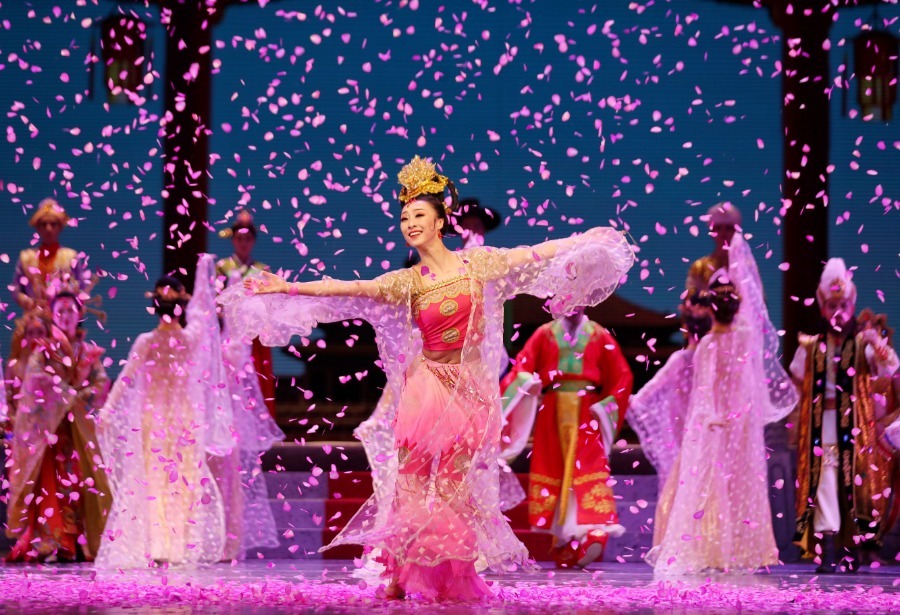
Dance Drama 'Flower Rains Along the Silk Road'
Introduction
Dance Drama "Flower Rains Along the Silk Road", is a celebrated Chinese dance drama that has captivated audiences since its debut. This enchanting production is inspired by the historic Silk Road and the mesmerizing Dunhuang murals, presenting a fusion of artistic storytelling and cultural heritage. First performed in 1979, the drama has become a cherished cultural treasure for its vivid portrayal of peace, friendship and the rich traditions of Dunhuang culture.
Background
The dance drama was first conceptualized in the late 1970s by artists from the Gansu Song and Dance Ensemble, now known as the Gansu Opera and Dance Theater. These artists, driven by a desire to break free from the constraints of the cultural revolution, sought inspiration in the ancient Mogao Grottoes of Dunhuang in Gansu province. With a keen artistic vision, they embarked on creating a production that would rejuvenate Chinese dance drama, drawing heavily from the visual and thematic elements of the Dunhuang murals and the historical significance of the Silk Road.
The inaugural performance of Dance Drama "Flower Rains Along the Silk Road" took place in 1979 in Beijing. This premiere was a resounding success, earning the drama prestigious accolades such as the "First Prize of Creation" and the "First Prize of Performance" from the Ministry of Culture.
Themes and Motifs
Silk Road Influence
The Silk Road serves as both the backdrop and a central theme in Dance Drama "Flower Rains Along the Silk Road". The road, historically a conduit for cultural exchange and trade, is depicted in the drama as a symbol of peace and friendship. The narrative portrays the story of Dunhuang painter Shen Bizhang, his daughter Yingniang, and their bond with a Persian merchant. This storyline highlights the harmonious exchanges between different cultures along the Silk Road, underscoring the drama's theme of unity and mutual respect.
Cultural Significance
The drama vividly brings Dunhuang culture to life, utilizing dance to emulate the aesthetics and narratives found in the centuries-old Dunhuang murals. The S-shaped dance posture of Yingniang, for instance, is an iconic element in the production that reflects the unique dance vocabulary and aesthetic value of the Dunhuang dance school. This distinctive artistic expression not only pays homage to the historical and cultural essence of Dunhuang but also contributes to the diversity of Chinese dance schools, offering audiences a glimpse into the profound cultural legacy of the region.
Key Productions and Adaptations
Over the decades, the drama has undergone several revisions to adapt to changing market demands, resulting in multiple editions. It has been performed by ten generations of dancers with numerous actresses portraying Yingniang. The drama has continually evolved, with noteworthy versions produced in 2008 and 2016.
Key adaptations of the dance drama have been highlighted in significant national and international events, such as the opening ceremony of the Beijing 2008 Olympic Games, the Expo 2010 in Shanghai, and the Silk Road (Dunhuang) International Cultural Expo. These performances have not only reinforced the drama's status as a cultural ambassador but have also showcased its role in promoting Chinese culture on a global stage.
Artistic Influences
The artistic influences of the dance drama are manifold, with the Dunhuang murals serving as a primary source of inspiration. These murals, with their vivid colors, intricate designs and spiritual themes, have been transformed into dynamic dance sequences that capture the essence of the ancient artwork. The drama's choreography reflects the grace and elegance inherent in the Dunhuang artistic tradition, while its narrative structure pays homage to the timeless stories depicted within the murals. The production's innovative approach to blending traditional Chinese dance with contemporary storytelling techniques has solidified its position as a distinguished work in the realm of dance drama, highlighting the profound impact of Dunhuang's artistic heritage on modern performance arts.








